
DR. JOANA VONDEE-AWORTWI
Freedom and Sovereignty: Africa After Colonial Rule
The third session of the African Studies series focused on Africa in the post-colonial era, insofar as it can truly be described as post-colonial. Marking the halfway point of the series, the session was delivered online from Ghana by Dr. Joana Vondee-Awortwi. Rather than presenting a conventional lecture, she adopted an interactive approach, inviting participants to actively engage with the material and learn collectively.
The session formed a natural continuation of the previous lecture, which highlighted that although many African states achieved formal independence, patterns of domination and dependency continue to persist. Building on this discussion, the lecture explored how these dynamics manifest in practice and examined the extent to which African states have been able to determine their own political, economic, and strategic trajectories since independence. The reflections below revisit some of the key examples discussed throughout the session and the insights they inspired.
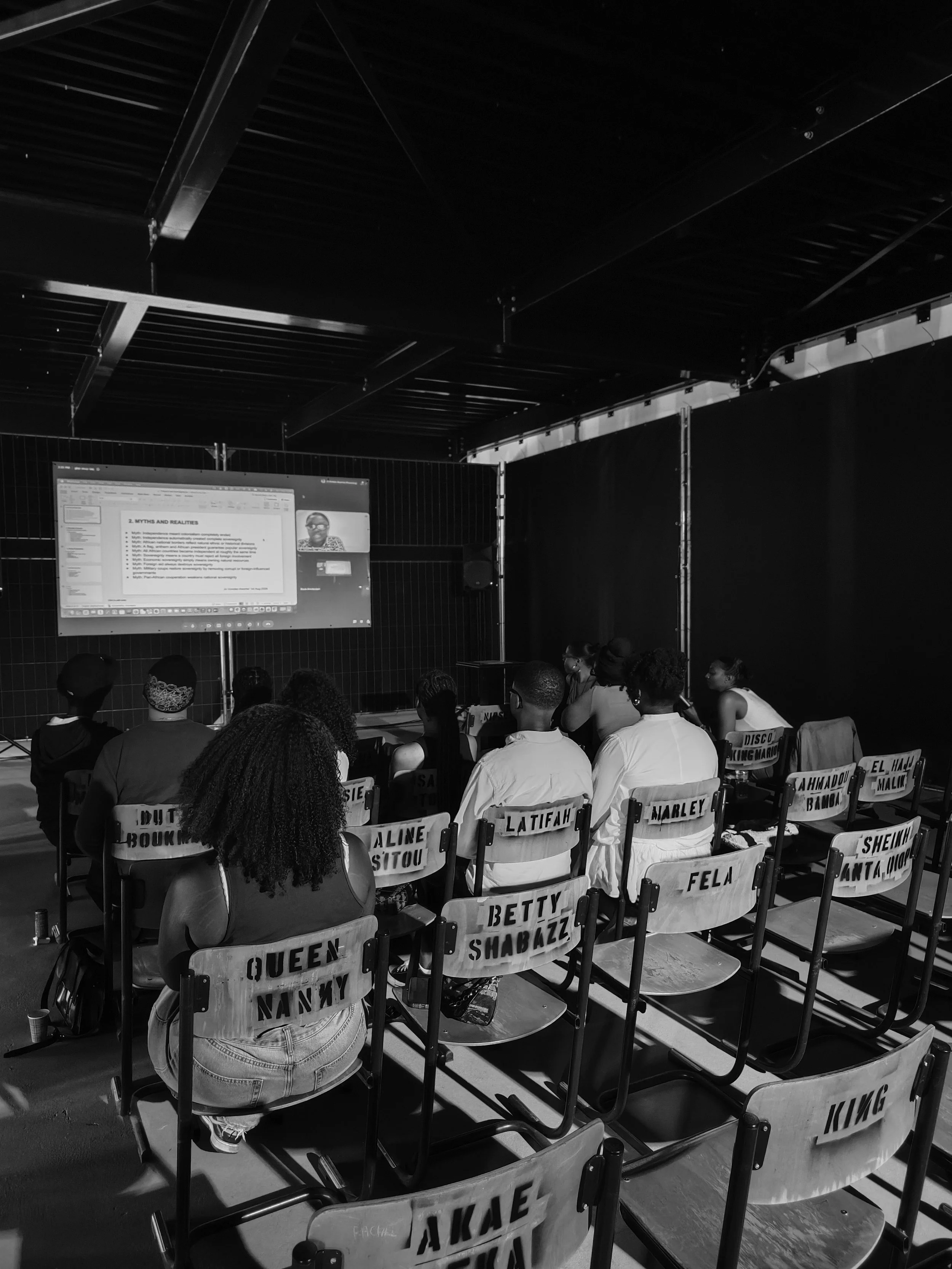
Sovereignty: A Concept That Remains Elusive in Africa
Dr. Joana Vondee-Awortwi opened the session with a simple yet compelling question: What does sovereignty mean? It was an effective starting point, inviting participants to reflect on the concept before comparing their own understanding with the realities experienced across the African continent. The discussion quickly revealed a striking contrast between how sovereignty is commonly understood and how it is experienced in practice. Freedom and independence become little more than myths when their fundamental conditions cannot be realised.
As the lecture demonstrated, independence should not be understood in absolute terms. A country may be free from direct colonial rule, yet remain constrained by other forces that continue patterns of domination. Genuine sovereignty also depends on economic and strategic autonomy. It requires states to exercise control over their natural resources, determine their own development priorities, pursue independent foreign policies, and resist the influence of former colonial powers, international financial institutions, and other external actors. Because these conditions are often only partially realised, sovereignty remains an ongoing challenge rather than an accomplished fact.
One of the clearest examples discussed during the session was external debt. When states become heavily indebted to foreign governments or international organisations, their ability to make independent political and economic decisions is significantly reduced. Similar dynamics can be observed in the role of multinational corporations, many of which continue to profit from Africa’s natural resources while limiting the extent to which African states and communities benefit from them.
These examples illustrate that formal independence does not necessarily translate into genuine autonomy. Civil wars, corruption, colonial borders, and inherited administrative systems further weaken the capacity of states to act independently. Perhaps most striking is that many of the mechanisms that sustain these relationships are presented as fair partnerships or even as forms of assistance. While such arrangements may indeed provide support, they often do so in ways that primarily serve the interests of those offering it, leaving African states with limited room to determine their own course.
As the previous session suggested, lasting domination rarely depends on force alone. It is sustained by creating the perception that people retain a degree of autonomy while simultaneously fostering the impression of goodwill. When these same dynamics continue under different names and through different mechanisms, sovereignty remains constrained. Even though Africa is formally independent, the pursuit of genuine sovereignty continues.
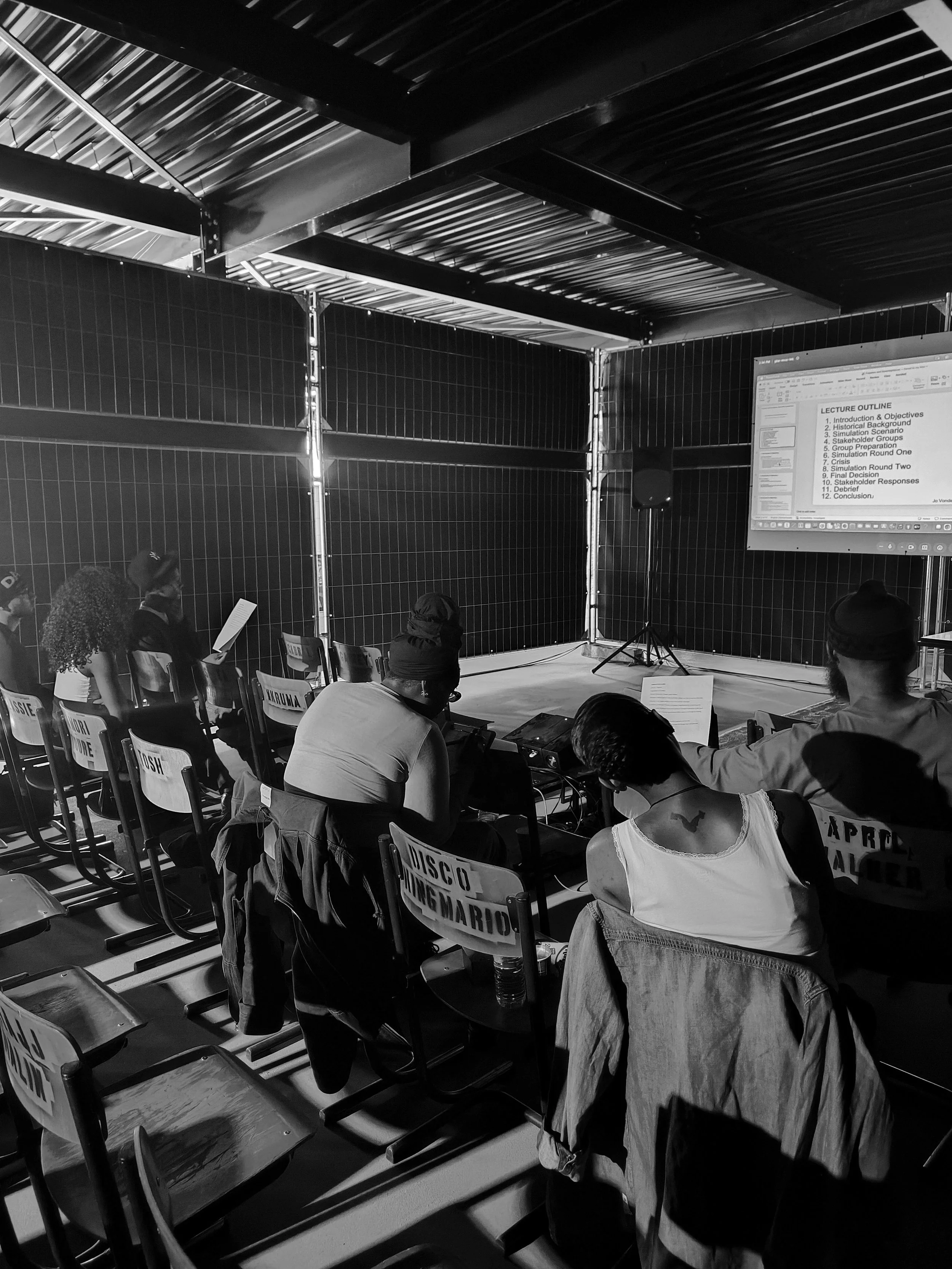
How Does One Uphold a Sovereign African State?
While the session began by introducing the theme of sovereignty, the remainder of the lecture centred on interactive group exercises designed to translate theory into practice. Participants took part in a simulation in which they assumed the roles of key stakeholders in one of two fictional African states that had recently gained independence: Nzania or Lumumba. Both countries faced the legacies of colonialism, economic dependency, and the challenge of transforming political independence into genuine sovereignty.
Divided into two groups, participants represented different stakeholders, each developing their own interests, understanding of sovereignty, and negotiation strategy. Across several rounds of negotiations, they debated the control of natural resources, foreign partnerships, nationalisation, economic development, and political stability. In Nzania, the central question was whether the country should accept a foreign loan in exchange for access to its abundant reserves of copper, gold, and timber while facing poverty, corruption, youth unemployment, and an economy heavily dependent on raw material exports. In Lumumba, participants considered whether agreements with the former colonial power, which continued to influence the country’s currency and economy, should be maintained in the interest of stability or terminated to strengthen sovereignty.
The group representing Nzania unanimously rejected the proposed loan, arguing that the country’s natural resources belonged to its own people and should therefore remain under their control. Participants representing Lumumba reached a similar conclusion, choosing to end the agreements with the former colonial power in pursuit of greater sovereignty. After all, they were no longer a colony.
What stood out most was the participants’ determination to approach African challenges from an African perspective and their unwillingness to mistake dependency for partnership. Throughout the discussions, careful consideration was given to the long-term implications of entering agreements with former colonial powers. While every position was thoughtfully argued and defended, the exercise also offered valuable insight into the difficult choices African leaders have had to make, both at the moment of independence and in the decades that followed. Above all, it demonstrated that when governments make decisions, not every perspective is ultimately reflected in the outcome, even though the ideas left behind may have offered better opportunities for the country.
The session concluded with one final question: from the perspective of the African diaspora, how can we remain independent? Team Nzania argued that this begins with investing in Africa’s natural resources, decolonising our own ways of thinking, and reinvesting knowledge and wealth earned abroad into our own countries. Team Lumumba reached a similar conclusion. If you study abroad, return home and share your knowledge. If you choose to invest, invest at home rather than in the West.

What Our People Need, We Work For
The question that concluded the session did not end there. On the contrary, it continues to shape the way forward. It is one we encourage every participant to carry with them as they take their next steps in life, just as we continue to carry it with us in our own work. At The Black Activation Movement, responsibility is more than a principle. It is one of our core values. Yet responsibility, in itself, is never enough. Our approach is rooted in action. What contribution do we make, and what contribution do we want to continue making, to strengthen independence within the African diaspora? Our answer is simple. We invest in what our people need by making use of every resource available to us. What our people need, we work for, regardless of the commitment, effort, or sacrifice it requires. This is not an individual responsibility but a collective one, and it is our shared task to keep reminding one another of it.
The Black Diaspora Institute is built upon the same principle. Intellectual independence requires infrastructure. That infrastructure can be left in the hands of others, allowing dependency to continue, as it has for generations. Or we can choose a different path. Our approach has always been to build what our communities need rather than wait for others to provide it. The Institute was created to offer exactly that: a space where African knowledge is shared by our people with our people.
The infrastructure is here. The question that remains is no longer what is needed, but what each of us is willing to contribute to the independence of our people.
What’s Next?
Our next African Studies gathering will take place on Saturday, 8 August. This time, rather than a lecture, we will come together for an excursion to The Black Archives.
The visit is more than an opportunity to strengthen our community. It is also a reminder that learning extends beyond the classroom and that the pursuit of knowledge is a shared, collective endeavour. The conversations we begin during our sessions do not end when the lecture concludes. They continue in spaces such as The Black Archives, where our shared histories, ideas, and experiences remain central.
We look forward to welcoming you there and continuing the conversation together.